 Love music trivia? 🎵 Try Weekly Spin, our daily social music discovery diary!
Tips for Improving Your Game Scores
Whether you are a casual player looking to pass the time or a competitive enthusiast aiming to dominate the leaderboards, improving your scores in trivia and quiz games requires more than just luck. It demands a combination of systematic preparation, sound cognitive habits, active retrieval practice, and strategic gameplay choices. Trivia games are not just tests of memory; they are exercises in mental agility, rapid pattern recognition, and logical deduction. The difference between a high-scoring expert and a beginner often lies not in how much they naturally know, but in how they study, practice, and react under pressure. In this comprehensive guide, we will break down the essential tips, cognitive strategies, and gameplay techniques that will help you elevate your performance across all game types on guess-games.com, transforming your play sessions into powerful learning experiences.
Master the Fundamentals
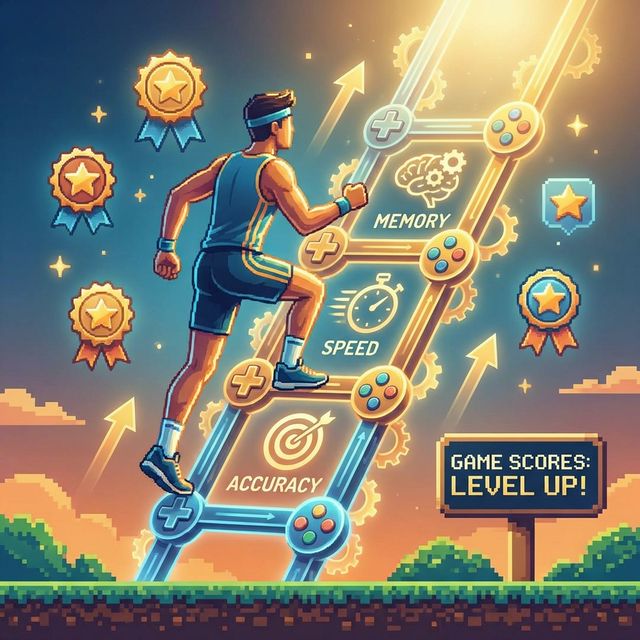
Every journey toward high scores starts with a deep understanding of the basics. Before aiming for speed or attempting complex deductions, take the time to read the game rules and understand the scoring formulas. In many games on guess-games.com, scores are calculated based on both accuracy and the speed of your response, while other modes might reward consecutive streaks or penalize incorrect guesses. Knowing exactly how you are evaluated allows you to tailor your strategy—for instance, deciding whether it is better to take an extra second to guarantee a correct answer or to make a quick guess to secure a speed bonus. Practice is the foundation of familiarity. When starting a new game, such as Album Year Guess or Flag Guess, begin on a focused mode or a lower difficulty level. This builds your comfort level with the interface, the types of questions, and the pacing. Pay close attention to the visual and audio feedback the game provides. If a flag is incorrect, study the correct option before clicking next. If you guess the wrong year for an album, note the decade and cover art style. This initial phase of low-stakes practice builds the baseline cognitive associations that will power your rapid responses in competitive modes later on.
Develop Effective Study Habits
True improvement in quiz games comes from active learning outside of active competition. Rote memorization—simply reading lists of facts—is one of the least effective ways to build a durable knowledge base. Instead, leverage cognitive science principles like active recall and spaced repetition. Active recall involves testing yourself rather than passively reviewing notes. When you play games on guess-games.com, you are naturally practicing active recall, forcing your brain to retrieve information, which strengthens the neural paths to that knowledge. Spaced repetition is the practice of reviewing information at increasing intervals over time. Rather than playing for three hours once a week, play for 15 minutes every day. This consistency signals to your brain that the information is important to retain long-term. Additionally, keep a mental or written list of your 'trouble zones'—the specific regions, decades, or categories where you consistently lose points. If you realize you struggle with geography in Central Asia or music from the 1980s, dedicate a study session specifically to those areas. Read about the history, listen to the music, and then return to the game to test your progress. Building your knowledge systematically is the most reliable way to watch your scores climb.
Optimize Your Gameplay Strategy
When you are in the middle of a game, your strategic choices can make or break your score. One of the most critical decisions is managing the speed-accuracy trade-off. Rushing leads to careless errors, while being too slow wastes valuable time and limits your maximum potential score. A good rule of thumb is to allow yourself a brief moment of calm at the start of each round to process the question or image, then commit to a decision quickly once you identify a strong candidate. Use elimination techniques to improve your odds on difficult questions. If you do not know the correct answer, look at the options and rule out the ones that are definitely wrong. In a multiple-choice geography game, eliminating two options immediately increases your chances of guessing correctly from 25% to 50%. On games that allow multiple attempts, treat your initial guesses as information-gathering tools rather than absolute answers. For example, in a number guessing game, a guess that is widely off can still eliminate a large portion of the number line, guiding your next steps. Finally, maintain your focus and mental stamina—take short breaks between long play sessions to avoid cognitive fatigue, which is the leading cause of sudden score drops.
Learn from Your Mistakes
The absolute fastest way to improve is to change how you view mistakes. In competitive gaming and learning, an error is not a failure; it is the most valuable data point you have. When you get a question wrong, your brain is primed to learn because of the gap between your expectation and the reality. Take a moment to analyze why the error occurred: was it a knowledge gap (you simply did not know the fact), a misreading (you rushed and misread the question), or a strategic error (you guessed too quickly)? Correcting knowledge gaps is straightforward—review the correct answer and associate it with something memorable. For example, if you confused the flags of Slovakia and Slovenia, note the specific coats of arms and their positions. If the error was due to rushing, consciously slow down your pacing for the next few rounds. By actively reviewing your game history and reflecting on your mistakes, you transform lost points into future victories. The players who reach the top of the leaderboards are not those who never make mistakes, but those who rarely make the same mistake twice.
Continuous Improvement
In conclusion, becoming a master at trivia and quiz games is a rewarding process of continuous improvement. By mastering the fundamentals, building active study habits, optimizing your gameplay strategy, and actively learning from every mistake, you develop cognitive skills that extend far beyond the games themselves. You build focus, logical reasoning, memory recall, and a growth mindset—the understanding that your abilities can always be developed through dedication and effort. Enjoy the process of learning, celebrate your progress as your scores rise, and challenge yourself on the diverse range of games available at guess-games.com. Keep playing, keep learning, and let every round bring you closer to your full potential.